


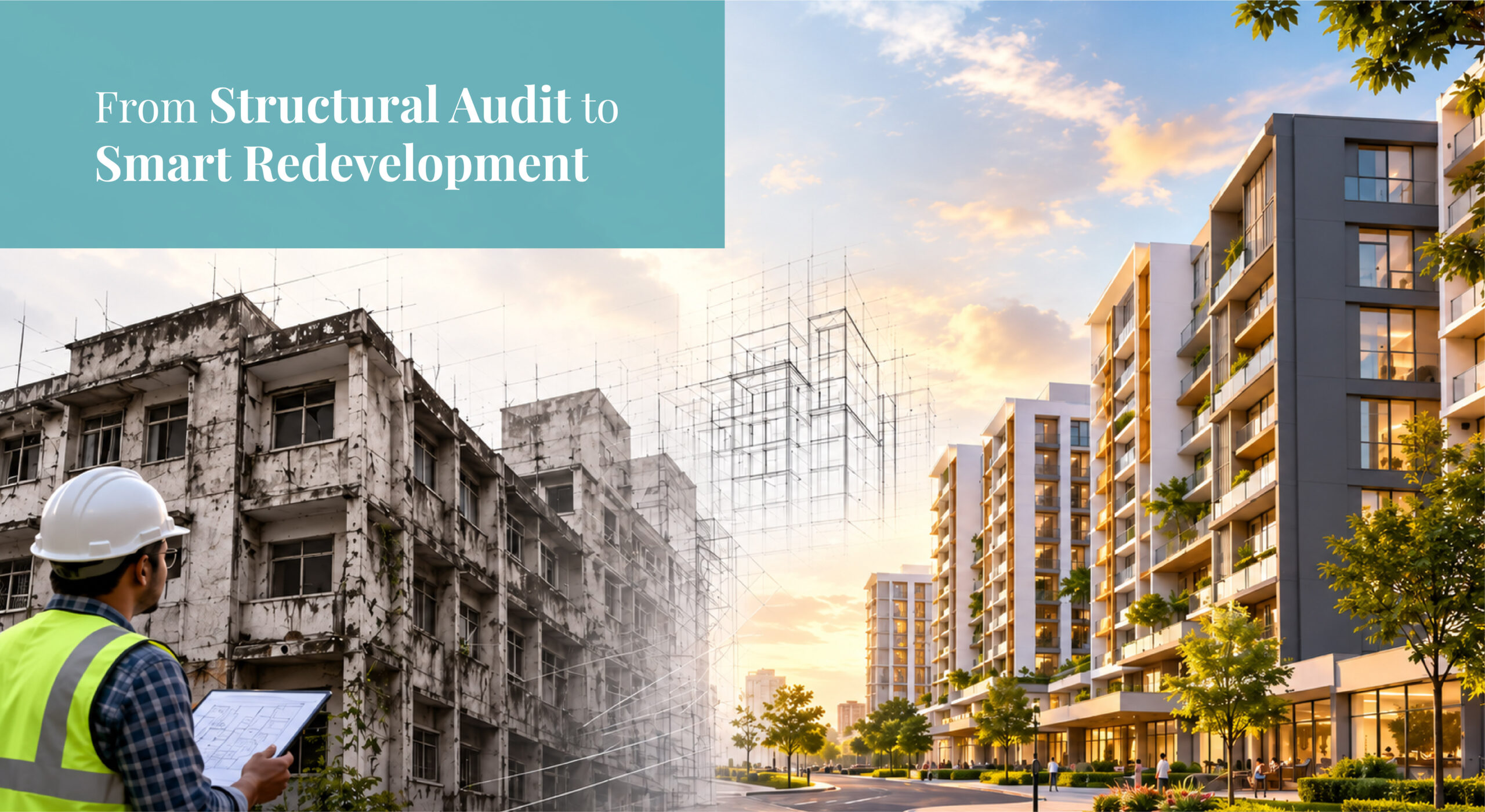

For an ageing housing society, questions about safety, repairs and redevelopment often go hand in hand. Cracks, seepage, damaged plaster or recurring repair costs may indicate that the building needs more than routine maintenance. The redevelopment process begins with a professional structural assessment.
What Is a Structural Audit?
A structural audit is a systematic assessment of a building’s structural condition. It examines important components such as columns, beams, slabs, walls and the overall structural framework to identify deterioration, damage and potential safety concerns.
A good audit identifies:
- Structural cracks and deterioration
- Corrosion of reinforcement
- Concrete damage and spalling
- Water seepage affecting structural elements
- Signs of settlement or structural movement
- Weak or damaged structural components
- The extent of repairs or strengthening required
Is a Structural Audit Mandatory for Housing Societies in Maharashtra?
The requirement for structural audits depends on the building’s age, location and applicable Maharashtra regulations and local authority requirements. It is an important step in understanding the safety and long-term viability of an ageing property.
8 Warning Signs Your Building May Need Redevelopment
1. Persistent Structural Cracks
Large, recurring or progressively widening cracks in columns, beams, slabs or other structural elements should not be ignored.
2. Severe Concrete Deterioration
Spalling concrete, exposed reinforcement or extensive deterioration can indicate that the structural elements require detailed assessment.
3. Repeated Water Seepage
Persistent seepage, particularly when it affects slabs, beams or other structural components, can contribute to long-term deterioration.
4. Extensive Corrosion
Rusting reinforcement can weaken structural components over time. Visible rust stains or exposed steel warrant professional inspection.
5. Frequent and Expensive Repairs
If the society is repeatedly spending on repairs but the same problems continue to return, members may need to assess whether continued repair is economically sensible.
6. Ageing Infrastructure
Older buildings may have outdated construction systems, deteriorated materials and infrastructure that no longer meets present-day expectations.
7. Structural Strengthening Is Becoming Extensive
If an audit recommends major strengthening, the society should compare the cost and practicality of strengthening with redevelopment.
8. The Building No Longer Meets Residents’ Needs
Limited amenities, inefficient layouts, outdated services, accessibility issues and inadequate parking also influence the redevelopment decision.
What Happens During a Structural Audit?
The structural audit begins with a visual inspection of the building and its structural components. The structural consultant examines areas showing visible deterioration and reviews available information about the building, including its age, construction and previous repairs. Then testing or other investigations are done to understand the condition of concrete, reinforcement and other structural components.
How to Read the Audit Report: Repair, Strengthen or Redevelop?
A structural audit points towards three possible approaches:
Repair:
Suitable when the structural issues are limited and can be addressed through conventional repairs and maintenance.
Strengthen:
Recommended when certain structural elements require additional intervention to restore or improve their capacity and durability.
Redevelop:
May be considered when the building has extensive deterioration, major structural concerns, high recurring repair requirements or other limitations.
Repair vs Redevelopment: How to Decide
- Structural condition: Repair works when issues are manageable; redevelopment suits buildings with extensive deterioration.
- Repair costs: Repair makes sense when costs are sustainable; redevelopment may be better when expenses are recurring or high.
- Building age: Repair can work when the building remains viable; redevelopment is worth considering for ageing buildings.
- Amenities: Repair may suffice when existing facilities are adequate; redevelopment can address outdated or inadequate amenities.
- Long-term outlook: Repair keeps a viable building functional; redevelopment offers a more sustainable long-term future.
- Resident requirements: Repair works when current space and facilities meet residents’ needs; redevelopment can provide improved homes, infrastructure and amenities.
Who Should Conduct the Audit?
A structural audit should be conducted by a suitably qualified and experienced structural professional as required under the applicable regulations. The society must ensure that the professional has the appropriate qualifications, registrations and experience.
What Are the Next Steps After the Audit?
- Reviewing the findings and recommendations.
- Planning the required work
- Obtaining suitable technical advice
- Understand the scope of damage or findings
- Exploring the redevelopment process, including feasibility, development potential, resident requirements, legal considerations and potential development partners.
For societies considering redevelopment, working with experienced redevelopment developers in Pune can help bring together the technical, planning and development aspects of the process.
If your society is evaluating its redevelopment potential, trust an experienced redevelopment builder in Pune who can help you understand the next steps after the structural assessment and evaluate the possibilities for your property.




 +91 83088 20114, 83088 20115
 kwalityworlddevelopers@gmail.com


